You come home one day to find your beloved Alocasia Frydek drooped over the side of the pot, leaves yellow and lifeless. Panic sets in. Is it dead? Should you throw it in the compost? Stop! Unlike many other houseplants, Alocasias have a secret superpower: the corm. As long as the central bulb is firm, your plant is effectively immortal. In this guide, we will walk you through the emergency surgery required to bring an Alocasia back from the brink of death using the “Rehab Box” method.
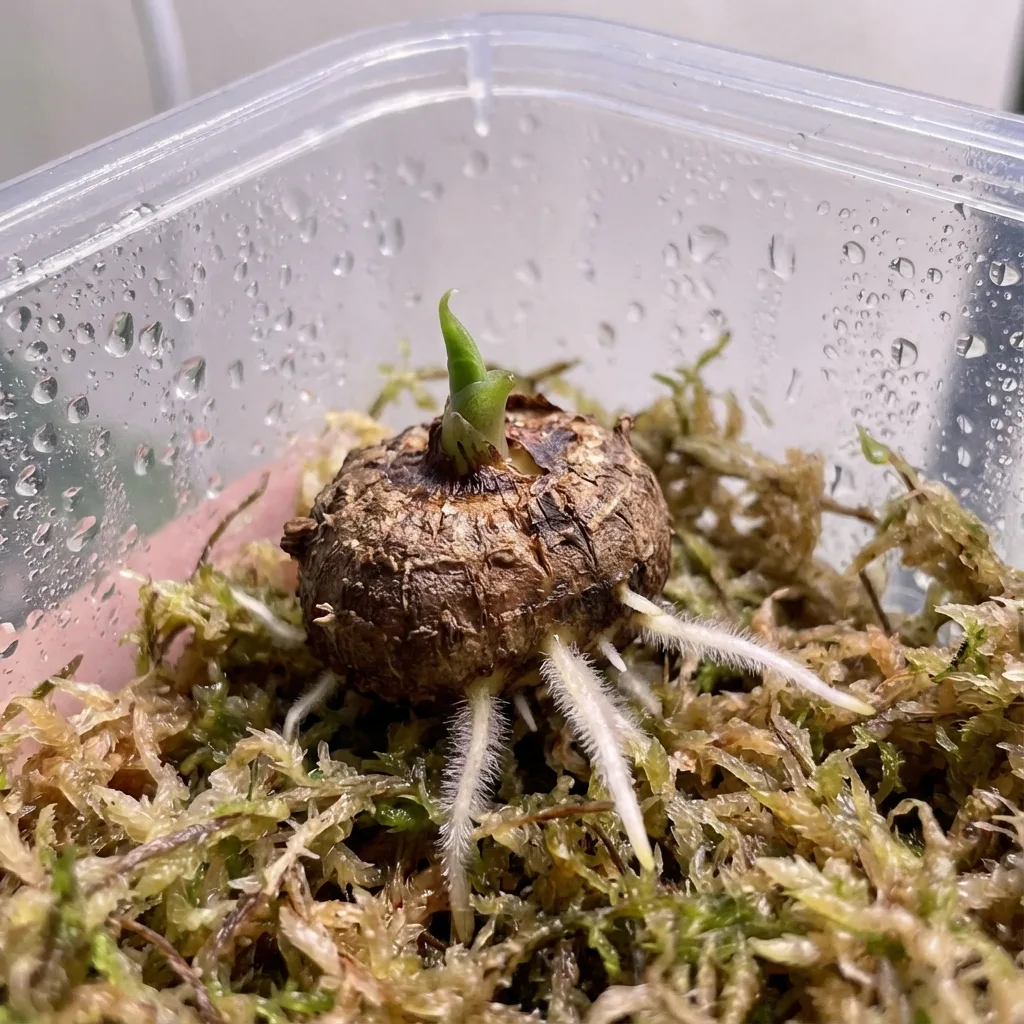
To revive a dying Alocasia, first check the roots. If they are mushy (rot), cut them all off and peel the bulb until only clean tissue remains. Dip it in Hydrogen Peroxide, then place the naked corm in a clear container with moist sphagnum moss or perlite (a “Prop Box”). Keep it warm and humid; it will resprout in 4-8 weeks.
Jump to Sections
ToggleThe Triage: Is it Dead, Dormant, or Rotting?
Before you grab the scissors, you need to understand why the plant is suffering. Treating a thirsty plant like a rotting one can be fatal.
😴 Dormancy
Symptoms: Leaves turn yellow one by one as winter approaches. The soil is dry. The stem remains firm.
Cause: Low temperatures (< 15°C) or reduced daylight.
Action: Stop watering and let it sleep, or add a heat mat to wake it.
☠️ Root Rot
Symptoms: Sudden collapse of multiple leaves. The soil is wet. A sulfur/swamp smell comes from the pot.
Cause: Overwatering, dense soil, or lack of drainage.
Action: Emergency surgery (Protocol A).
Protocol A: The Surgical Rescue (Root Rot)
If you smell rot or pull the plant up to find mushy, brown, slimy roots, you must act immediately. Rot is a bacterial infection that spreads fast.
Step 1: The Amputation
Unpot the plant and wash away all soil. Sterilize your scissors with alcohol. Cut away every single root that is brown, mushy, or hollow. Do not be afraid to cut them all off. If the rot has traveled up into the bulb (corm), use a sterile knife to carve out the rot until you see only fresh, white/cream flesh.
Step 2: The Peroxide Bath
Mix 1 part 3% Hydrogen Peroxide with 2 parts water. Submerge the cleaned corm (and any remaining healthy roots) in this fizzing bath for 10-15 minutes.
Why? The oxygen released by the peroxide kills anaerobic bacteria responsible for the rot and cauterizes the wounds.
Step 3: Callousing
Let the treated corm sit on a paper towel in open air for 24 hours. This allows the cut surfaces to dry and seal (callous), preventing rot from re-entering once you put it back in moisture.
The “Rehab Box” Method
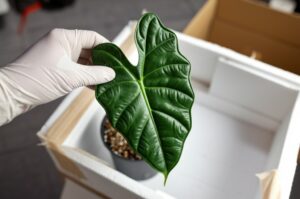
Now that you have a clean, sterilized “stump” or corm, you need to convince it to grow roots again. You cannot put this directly into potting soil—it will rot again. You need a sterile, high-humidity environment: The Prop Box.
What You Need
- A clear plastic container with a lid (Tupperware, takeout container).
- Medium: Sphagnum Moss (best), Perlite, or Fluval Stratum.
- Heat Source (optional but recommended): A seedling heat mat.
Instructions
- Soak your sphagnum moss in water, then squeeze it out until it’s just damp (like a wrung-out sponge). It should not drip.
- Fill the container with 2 inches of moss.
- Nestle the Alocasia corm into the moss. Do not bury the top growth point.
- Close the lid to trap humidity (100% humidity is the goal).
- Place it in a warm bright spot or on a heat mat.
💡 Pro Tip: Open the box every 3-4 days for a few seconds to let fresh oxygen in (“burping the box”). This prevents mold growth.
The Recovery Timeline
Patience is the hardest part of this process. Alocasias operate on their own time.
- Week 1-2: Nothing seems to happen. The corm is directing energy internally.
- Week 3-4: You might notice white fuzzy bumps near the bottom (root primordia).
- Week 5-6: First true roots emerge. A small green spike (new leaf) may appear at the top.
- Month 3: Once the plant has 2-3 inches of roots and at least one leaf, you can transition it to a semi-hydro setup (Pon/LECA) or a very airy aroid mix.
Frequently Asked Questions
Should I cut all the leaves off?
If the roots are 100% gone, yes. The plant cannot support leaves without roots. Cutting the leaves reduces water loss and forces the plant to focus specifically on root production.
My corm went mushy in the prop box. Why?
It was likely not cleaned enough (rot remained inside), or the moss was too wet. If the corm is completely mushy, it is unfortunately dead. If there is still a hard core, repeat the surgery and try Perlite (which is drier) instead of moss.
🌿 Prevention is Better than Cure
Learn how to pot your Alocasia correctly to avoid this next time: