Jump to Sections
ToggleAlocasia Roseus Care Guide: The Rare Pink Jewel (2025)
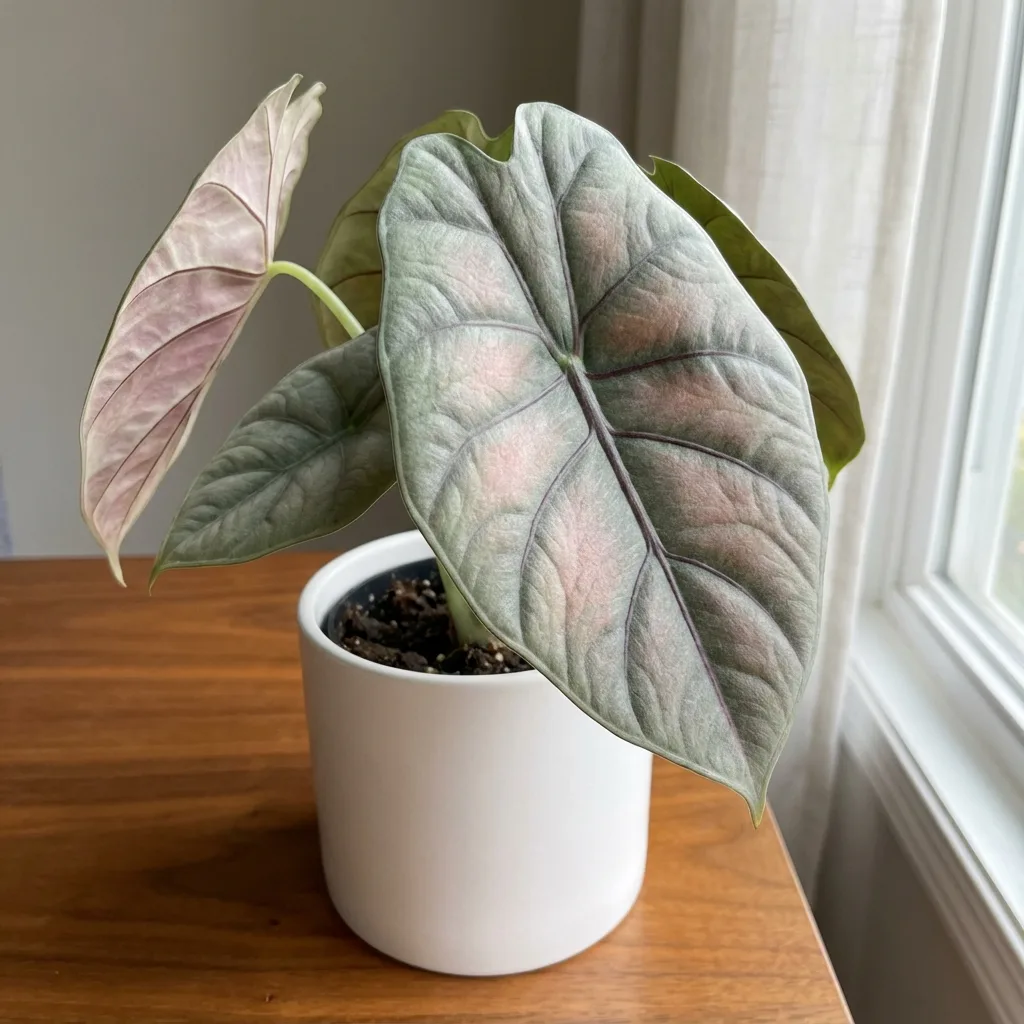
Just when we thought the ‘Jewel Alocasia’ collection was complete, Alocasia Roseus
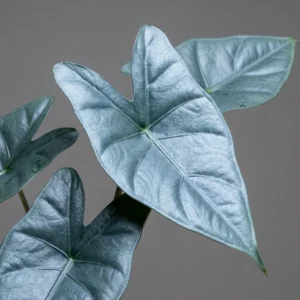
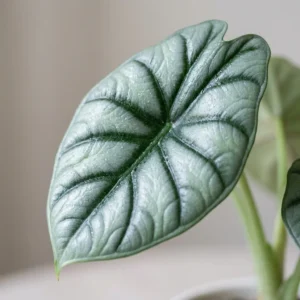
emerged from Sumatra in late 2024 to steal the show. With its unique rosy-pink undertones
and grayish-green velvet texture, it’s quickly becoming the most sought-after variety of the year.
Alocasia Roseus thrives in high humidity (60%+) with an airy, chunky substrate.
It’s particularly sensitive to root rot, so let the top 2 inches of soil dry completely between
waterings.
Bright, indirect light brings out its signature pink blush.
What is Alocasia Roseus?
Described scientifically only recently, Alocasia Roseus is a small-to-medium growing species
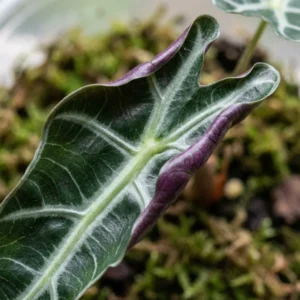
native to the Aceh region of Indonesia. It gets its name from the pale reddish-purple
undersides
and the subtle “blush” that appears on the upper leaf surface under optimal light conditions.
This variety belongs to the “Jewel Alocasia” group, sharing growth habits with
Alocasia Black Velvet and
Alocasia Melo. It stays relatively compact (12-15 inches indoors),
making it perfect for terrariums or small plant cabinets.
💡 Pro Tip: The “pink” hue is structural color, not just pigment.
The angle of light changes how pink the leaf looks! Place it slightly below eye level
near a grow light to see the full iridescent effect.
Light Requirements
To maintain that signature grayish-pink coloration, Alocasia Roseus needs bright, indirect
light.
Too little light causes the leaves to turn a muddy dark green, losing their iridescent charm.
- Best Spot: 2-3 feet from an East-facing window.
- Grow Lights: 12 hours daily under full spectrum LEDs (200-400 foot-candles).
- ⚠️ Warning: Direct midday sun will scorch the velvet leaves instantly.
👉 Related: Complete Guide to Alocasia Light
Requirements
Watering & Soil Mix
This is where most growers fail. The Roseus has a thick, succulent-like stem that stores water,
so overwatering is the #1 killer. Always let the top 2 inches of soil dry before watering
again.
The Perfect Soil Mix
Don’t use standard potting soil. Create an ultra-chunky aroid mix instead:
- 40% Orchid Bark (medium chunk)
- 30% Coco Coir
- 20% Perlite or Pumice
- 10% Worm Castings
👉 Related: Best Soil Mix for Alocasia: Complete
Recipe
Humidity: The Dealbreaker
Like all jewel Alocasias, the Roseus demands high humidity (60-80%).
Without it, you’ll see crispy leaf edges and stunted growth. Here’s how to maintain proper humidity:
- Humidifier: The most reliable method. Run it near your plants daily.
- Pebble Tray: Place the pot on wet pebbles (don’t let the pot sit in water).
- Grouping Plants: Cluster your tropicals together to create a micro-climate.
- Terrarium: Enclosed environments maintain naturally high humidity.
👉 Related: How to Increase Humidity for Alocasia
Common Problems
✅ Signs of a Healthy Plant
- Leaves held upright and firm
- Visible pinkish glow under light
- New leaf emerging every 3-4 weeks
- Firm, white roots
❌ Signs of Trouble
- Yellowing lower leaves → Overwatering
- Crispy brown tips → Low humidity
- Loss of pink color → Insufficient light
- Mushy stem → Root rot (emergency!)
If you notice yellowing leaves, check our troubleshooting guide:
Why Are My Alocasia Leaves Turning Yellow?
Frequently Asked Questions
Is Alocasia Roseus hard to care for?
It’s intermediate difficulty. If you can keep a Black Velvet alive, you can handle a Roseus.
The main challenges are preventing root rot and maintaining high humidity without causing fungal issues.
Why is my Alocasia Roseus green instead of pink?
This usually indicates insufficient light. Gradually move it closer to your light source over a week
to encourage anthocyanin production—the pigment responsible for the pink/red tones.
Can I propagate Alocasia Roseus?
Yes! The best method is division during repotting. Look for offsets (baby plants) growing from the
mother plant’s base. You can also propagate from corms.
See our Alocasia Corm Propagation Guide for details.
Is Alocasia Roseus toxic to pets?
Yes, like all Alocasias, it contains calcium oxalate crystals that are toxic to cats, dogs, and humans
if ingested. Keep it out of reach of curious pets and children.
Learn more: Alocasia Toxicity Guide
🌿 Explore More Jewel Alocasias
Ready to expand your collection? Check out these related guides: