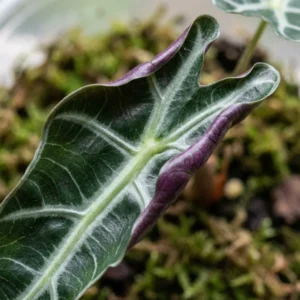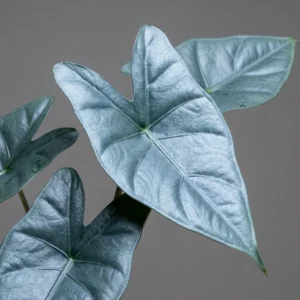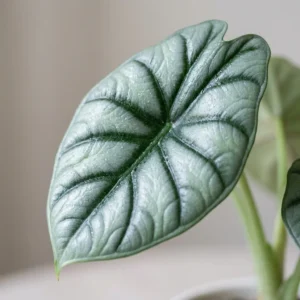
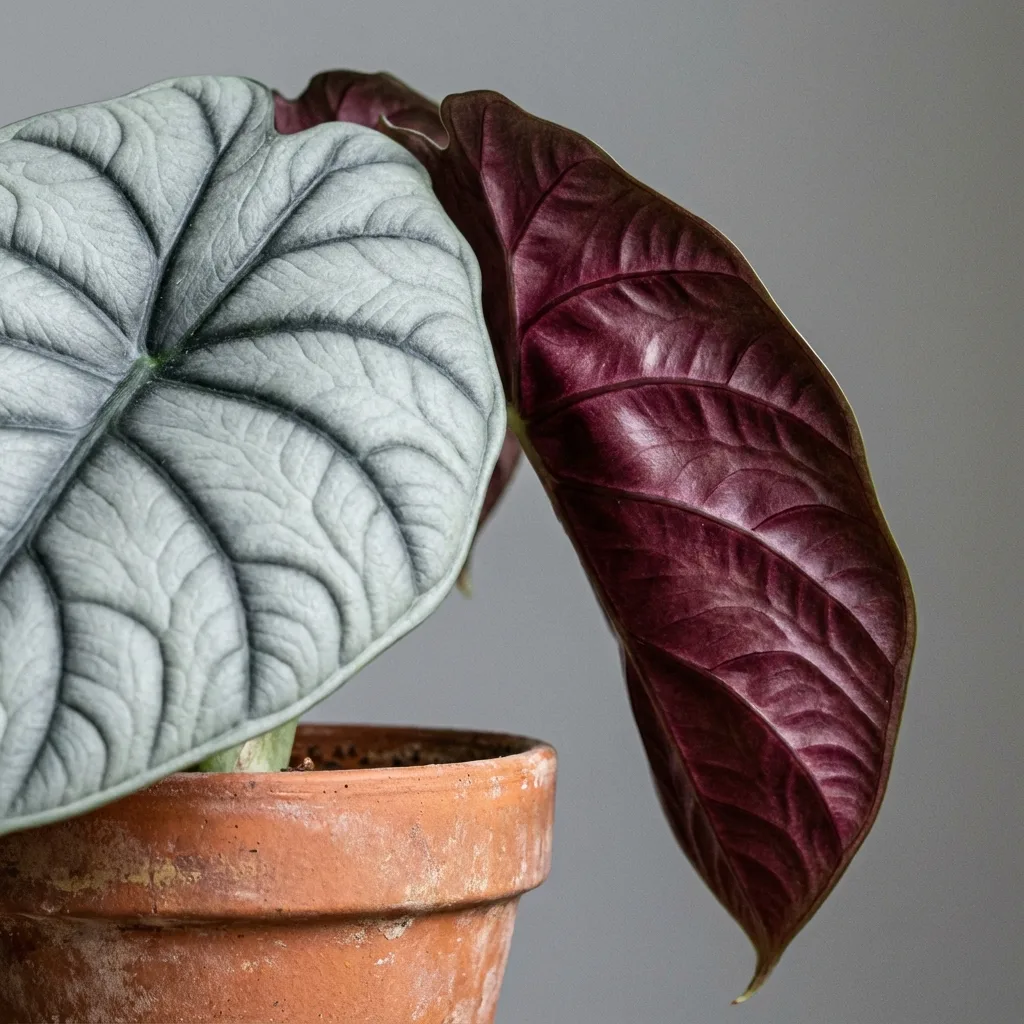
If the Alocasia Black Velvet is the “queen” of darkness, the Alocasia Nebula ‘Imperial Red’ is the knight in steel armor. With leaves that look like hammered silver and an underside the color of spilled wine, this plant feels prehistoric. It’s rare, it’s expensive, and frankly, it’s a bit of a diva. But once you see those metallic leaves unfurl, you’ll forgive it anything.
The Alocasia Nebula ‘Imperial Red’ (often called ‘Elaine’ incorrectly) is a Jewel Alocasia from Borneo. It demands very high humidity (70%+) and airy, rocky substrate. Unlike larger Alocasias, it hates having wet feet. Let it dry out almost completely between waterings, or risk rapid root melt.
Jump to Sections
ToggleIdentification: Imperial Red vs Elaine
The market for Alocasia nebula is messy. Let’s clean it up.
- Alocasia nebula (Type): Grey-green leaves, faint spotting on petioles.
- ‘Imperial Red’: Thicker leaves, intense silver-grey color, and a deep maroon/red underside. This is the most sought-after cultivar.
- ‘Elaine’: Often confused, but ‘Elaine’ usually has a slightly different leaf shape and less intense red backing. In the trade, they are often sold interchangeably.
Origin & History
This species hails from the limestone cliffs of Sarawak, Borneo. This gives us a massive clue about its care: Limestone = Calcium + Drainage.
In the wild, it grows in pockets of debris on rocks, not in deep swampy soil. This is why it rots so easily in standard potting mix.
Growth & Characteristics
The Nebula is a thick-skinned plant. Its leaves feel like stiff leather or even plastic.
- Size: Compact. Rarely exceeds 40cm indoors.
- Growth Rate: Glacial. Expect 3-4 leaves per year max.
- Petioles: Use looking closely at the stems. They have “snake skin” patterns (speckles).
Light Requirements
The silvery coating on the leaves acts like a natural sunscreen, reflecting light. However, do not put it in direct sun.
**Ideal:** Bright Indirect Light (2000-3000 Lux).
If the light is too low, the “steel” color turns a dull mud-green. If it’s too high, the leaves might curl inward to protect themselves.
Soil: Rocks Over Soil
Remember the limestone cliffs? Mimic that.
We strictly recommend a Lechuza Pon setup or a DIY “Rocky Mix”:
- 40% Pumice
- 30% Orchid Bark
- 20% Lava Rock
- 10% Worm Castings (for nutrients)
Avoid peat moss. It holds too much water for the Nebula’s sensitive roots.
Temperature & Humidity
This is where most growers fail. The Nebula is not a normal houseplant. It has evolved in 90% humidity rainforests.
Minimum: 60%.
Optimal: 75-85%.
If your home is dry (40%), this plant will go dormant or get spider mites within weeks. A greenhouse cabinet (IKEA Milsbo) is the best investment for a Nebula.
💡 Pro Tip: If you don’t have a cabinet, group it with other plants. Do NOT mist the leaves. Water sitting on thick Nebula leaves leads to fungal spots quickly.
Propagation Guide
Like all Jewels, it propagates via corms. Nebula corms are large and dark.
Because this plant is slow, be patient. A corm can sit in moss for 3 months before showing a single root. Don’t throw it away unless it’s squishy!
Toxicity & Safety
Standard Aroid warning: Contains calcium oxalate crystals. Toxic to cats/dogs.
Common Problems
✅ Good Signs
- Leaves held horizontally/upright
- Silver sheen is reflective
- New leaf larger than previous
❌ Bad Signs
- Yellowing edges: Overwatering (Root rot imminent).
- Grey dusting: Spider Mites (They love the texture).
- Drooping stems: Thirsty (or Rotted – check roots).
Frequently Asked Questions
Why is my Nebula dropping leaves?
The “One Leaf Syndrome” is common. If it pushes a new leaf and drops the oldest one simultaneously, it’s hungry. Increase fertilizer (Calcium + Magnesium specifically).
Can it live in Leca?
Yes, Nebula loves Semi-Hydro. Just ensure the water reservoir doesn’t touch the base of the bulb (rhizome), only the roots.