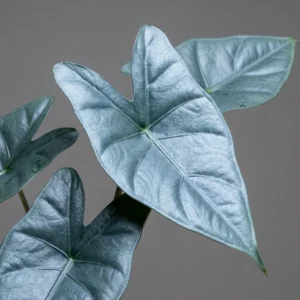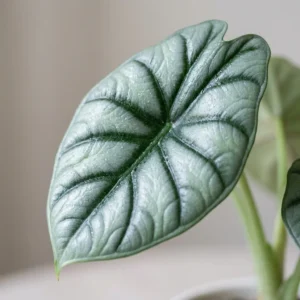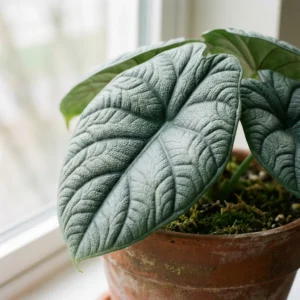
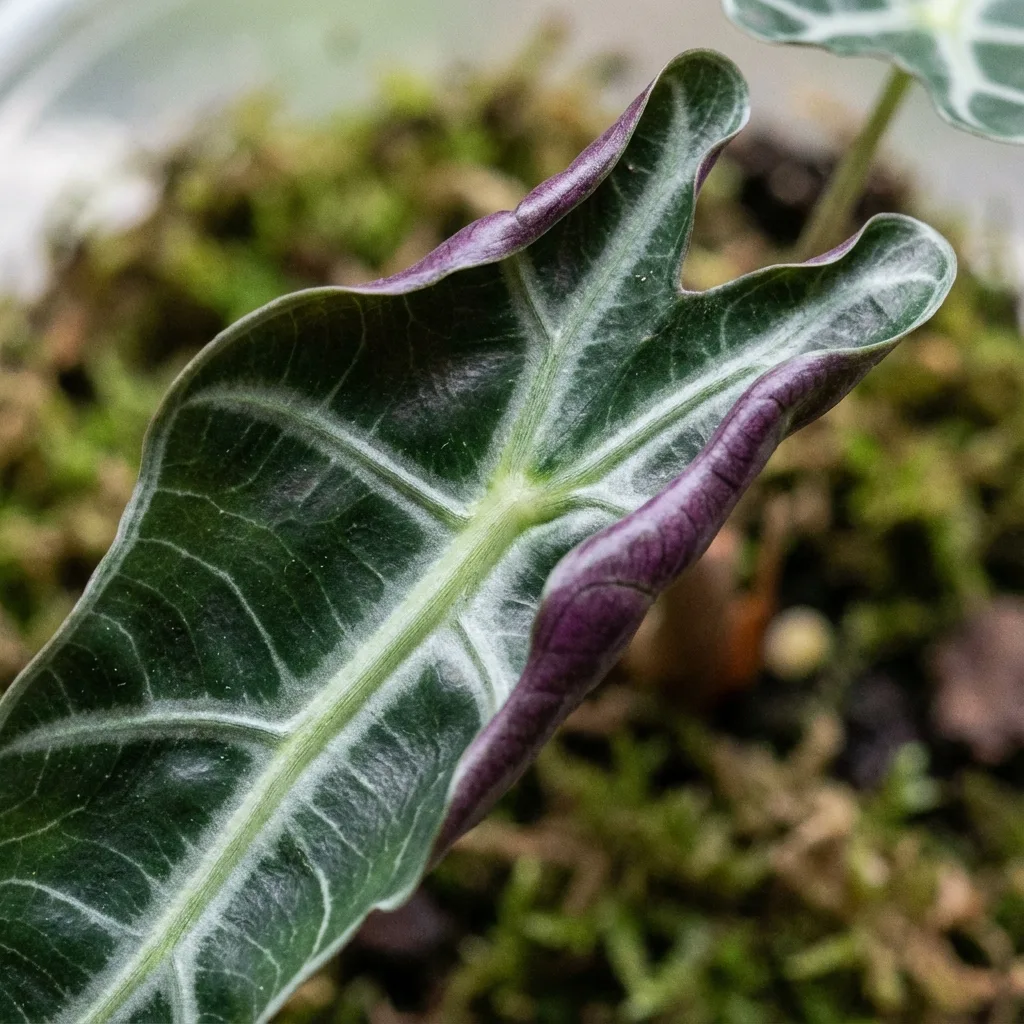
Meet the sharper, edgier cousin of the famous Alocasia Polly. The Alocasia Longiloba ‘Dragon Tooth’ earns its fierce name. With leaves that curve like a fang and an underside that glows deep amethyst purple, this plant demands attention. It’s often sold simply as a “Narrow Polly,” but make no mistake: this is a distinct cultivar with its own personality quirks.
The Alocasia Longiloba ‘Dragon Tooth’ prefers warm temperatures (20-25°C) and bright, filtered light. It is slightly more tolerant of lower humidity than the Jewel Alocasias, but it hates cold drafts. Use a chunky aroid mix and precise watering (allow top 2 inches to dry). If you can keep a Polly alive, you can master the Dragon Tooth.
Jump to Sections
ToggleIdentification: Dragon Tooth vs Polly
They look similar at a glance, but once you know the signs, they are impossible to confuse.
- Shape: Polly is wide and shield-like. Dragon Tooth is narrow, elongated, and curves inward like a claw.
- Color: Dragon Tooth often has a more intense, solid purple backing compared to Polly’s sometimes patchy maroon.
- Veins: The silver veins on Dragon Tooth are thinner and more refined.
Lighting Requirements
The Dragon Tooth is a forest floor dweller. In the wild, it grows under the canopy of giants.
Your Goal: Replicate the dappled sunlight of a rainforest.
– North Window: Acceptable, but growth will be slow.
– East Window: Perfection. Morning sun gives it energy without burning the tips.
The Perfect Substrate
This plant is prone to what we call “Stem Rot.” Because the petioles are fleshy and hold water, burying them too deep in wet soil is a death sentence.
Recommended Mix
- 40% Orchid Bark (Medium size)
- 30% Tropical Potting Soil
- 30% Perlite
This mix drains instantly. When you water, it should flow out the bottom within 5 seconds.
Watering Schedule
Do not follow a calendar. Feel the soil.
During summer, it might need water every 5 days. In winter, maybe once every 14 days.
💡 Pro Tip: Look at the “Guttation”. If you see water droplets on the tip of the leaf in the morning, the plant is transpiring excess water. This is normal, but if it happens every day, you might be overwatering slightly.
Humidity Needs
While it can survive in 50% humidity (average home), it thrives in 65%+. Low humidity causes the beautiful “fang tips” to turn brown and crispy.
Group it with other plants to create a microclimate.
Propagation
Like all Alocasias, it grows from corms. Dragon Tooth corms are typically small and round. Propagation in moss or perlite is highly effective near a warm window.
Common Problems
✅ Thriving
- Leaves are glossy
- Purple underside is vibrant
- New growth unrolls quickly
❌ Struggling
- Brown crispy tips: Low humidity.
- Yellow halo spots: Fungal infection (keep leaves dry).
- Drooping stems: Thirsty (or Rotted).
Frequently Asked Questions
Is it rare?
It is less common than the Polly but becoming easier to find. It is definitely considered a “step up” for collectors.