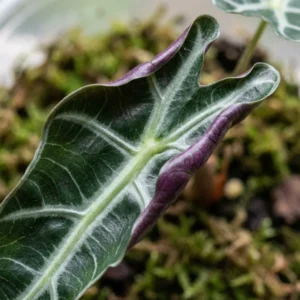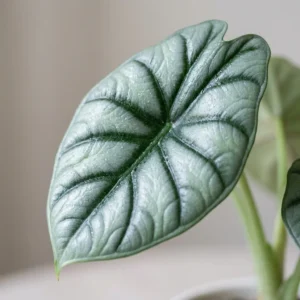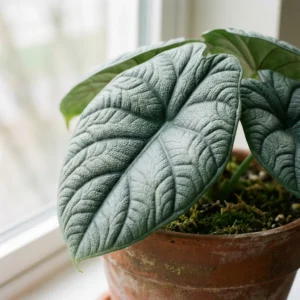
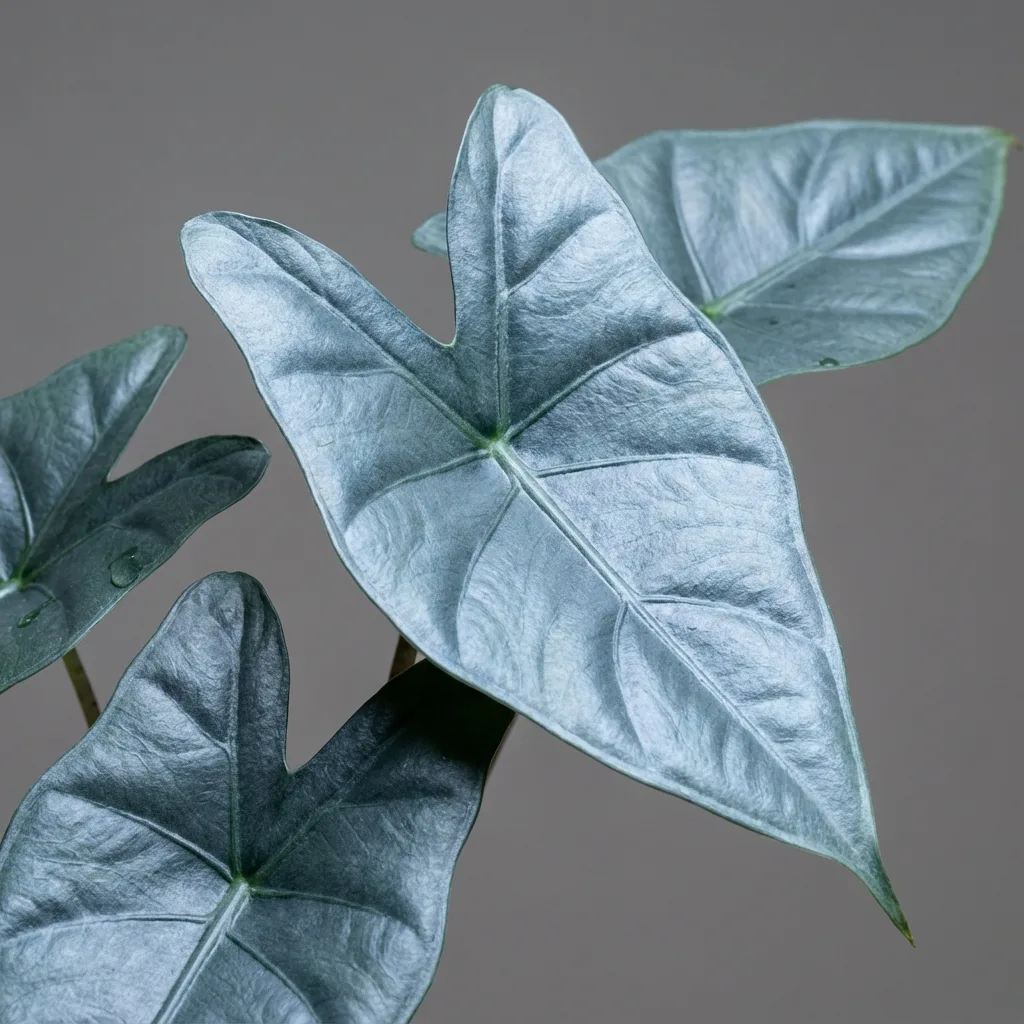
Some Alocasias are cute; the Alocasia Heterophylla ‘Corazon’ looks dangerous. With leaves as sharp as arrowheads and a metallic blue sheen that looks like galvanized steel, this plant is not for the faint of heart. Hailing from the Philippines, it’s one of the few Alocasias that naturally develops a blue hue. It’s rare, it’s sharp, and it’s spectacular.
The Alocasia Heterophylla ‘Corazon’ is a metallic-leaved species endemic to the Philippines. It requires bright indirect light to maintain its blue-silver color (too little light turns it green). It is drought-tolerant compared to other species but extremely sensitive to cold. Keep it above 65°F (18°C) at all times.
Jump to Sections
ToggleWhy ‘Corazon’?
‘Corazon’ means “Heart” in Spanish (common in the Philippines). While it is technically an arrowhead shape (sagittate), the lobes give it a stretched heart appearance.
Dragon’s Breath vs Corazon: You might see it sold as ‘Dragon’s Breath’. Technically, they are very similar cultivars of A. heterophylla, but ‘Corazon’ tends to be wider and more silver, while ‘Dragon’s Breath’ is narrower and greener.
The Blue Factor (Lighting)
This is the secret sauce. The metallic blue sheen is a structural color, similar to a butterfly’s wing.
To maximize the blue: You need high-quality light.
– Grow Lights: Full spectrum LED is best.
– Natural Light: Right in front of an East window.
– Warning: If you put it in a dark corner, it will revert to a dull, muddy green. The plant needs energy to produce the wax layer that reflects blue light.
Watering The Arrow
The Heterophylla group is tougher than the Jewel group (like Black Velvet). They have thinner, harder leaves that don’t hold as much water, but they also don’t rot quite as fast.
Allow the top 2 inches of soil to dry out. If leaves start to curl inward (like a taco), it is extremely thirsty.
Soil Mix
Standard Aroid Mix works well here.
- 30% Potting Soil
- 20% Perlite
- 30% Bark
- 20% Coco Coir
The Dormancy Warning
This species is dramatic about winter. If the temperature drops below 60°F (15°C), it will drop ALL its leaves and go into deep dormancy.
💡 Pro Tip: If it goes bald, DO NOT THROW IT AWAY. The tuber is alive. Keep it slightly damp (not wet) in a warm spot, and it will explode with new arrows in spring.
Toxicity
As always, toxic to cats and dogs. The sharp leaves can also be physically irritating if chewed.
Common Problems
✅ Good Signs
- Metallic sheen visible
- Leaves standing upright
❌ Bad Signs
- Green, not blue: Low light.
- Yellow spots: Rust Fungus (common in Heterophylla).
- Leaf drop: Too cold.
Frequently Asked Questions
Is it a Jewel Alocasia?
Taxonomically, no. It gets taller than true jewels. But in care requirements, treat it like a Jewel (airy soil, careful watering).