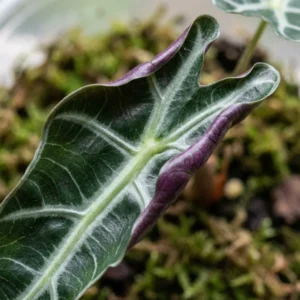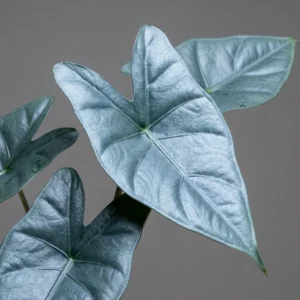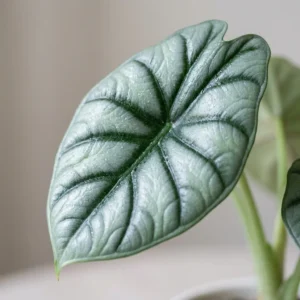
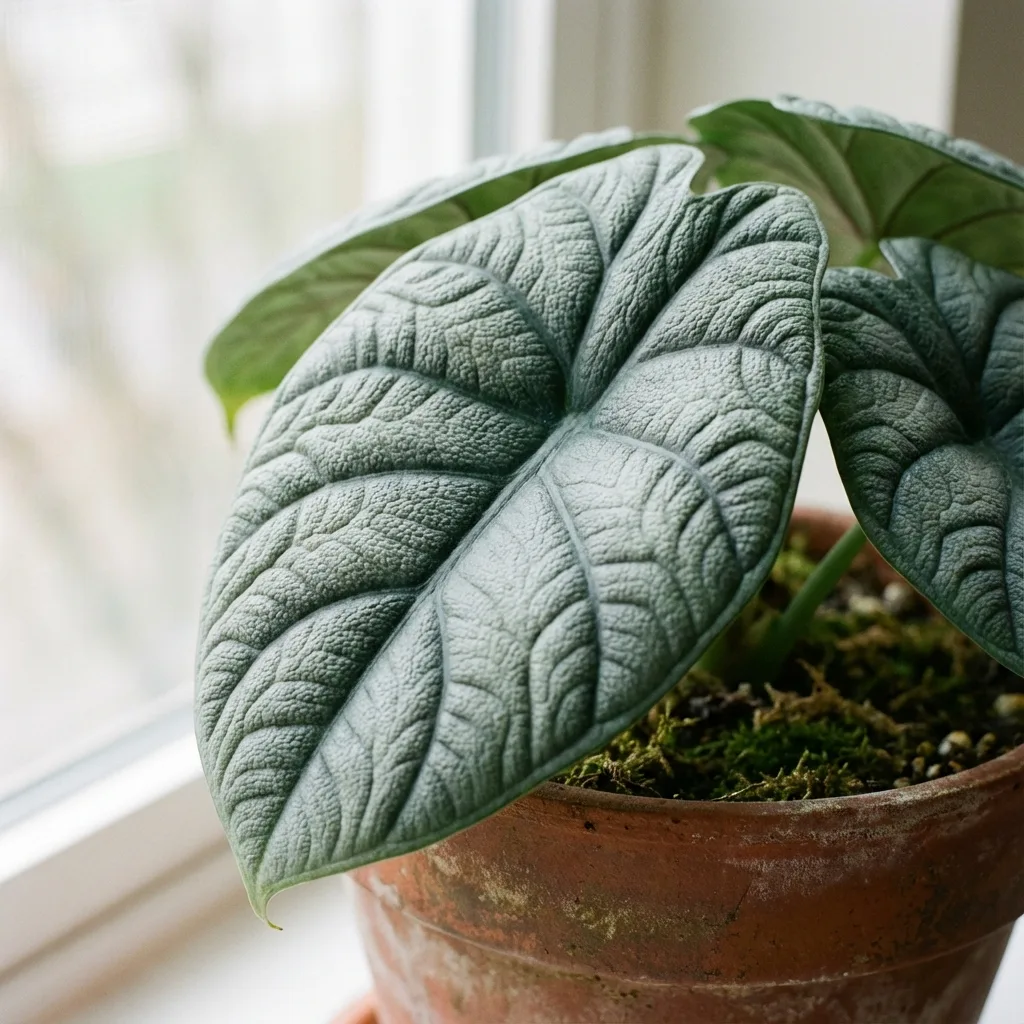
Welcome to the weird side of the jungle! If you thought the Dragon Scale was textured, wait until you touch an Alocasia rugosa (also known as Alocasia melo). Touching its leaves feels exactly like rubbing the skin of a cantaloupe melon or a rhinoceros. It’s thick, it’s rough, and it looks completely fake. But don’t be intimidated—under that tough exterior is a plant that just wants to be understood.
The Alocasia Rugosa (Melo) is a Jewel Alocasia from Borneo famed for its incredible texture. Because its leaves are so thick, it holds water longer than thin-leafed varieties. Do not overwater. Treat it almost like a succulent: chunky soil, high light, and let it dry out significantly between drinks.
Identification: Rugosa vs Melo
Let’s clear up the name first. You will see it sold as both.
- Scientific Name: Alocasia melo.
- Trade Name: Alocasia Rugosa (referring to “rugose” or rough texture).
They are the same plant. The term “Melo” actually comes from “Melon” because of the skin texture.
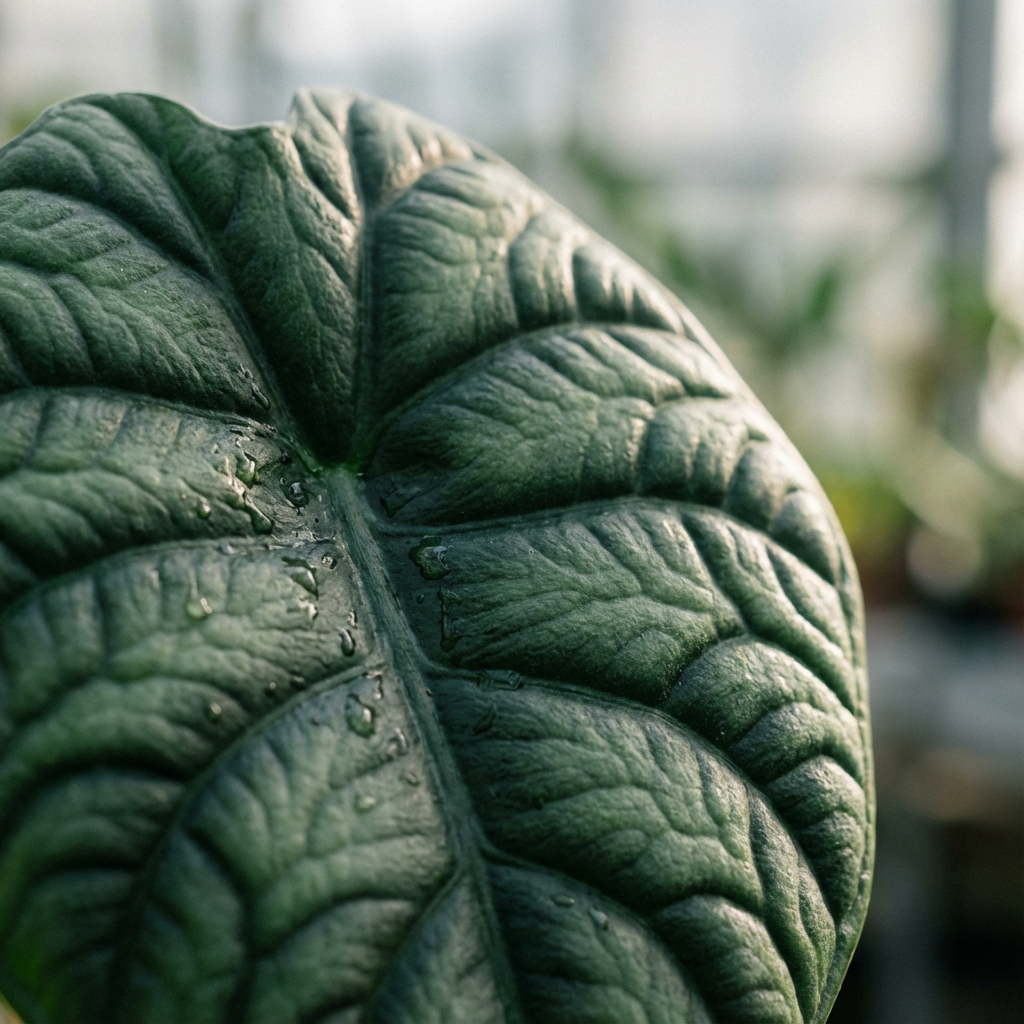
The Science of Texture
Why is it so rough? In the wild (Sabah, Borneo), this plant grows in shady, rocky outcrops. The thick, rugose epidermal layer is an adaptation to diffuse light and minimize water loss through transpiration.
What this means for you:
This plant is efficient. It doesn’t transpire (sweat) as fast as an Alocasia Macrorrhiza. Therefore, it drinks slower. If you water it on the same schedule as your other plants, you will drown it.
Light Requirements
The matte finish of the Rugosa means it absorbs light efficiently.
Best Spot: 2-3 feet from an East-facing window.
💡 Pro Tip: Do not use leaf shine or neem oil on this plant! The oils will clog the textured pores and ruin the matte finish, turning it into a greasy mess that attracts dust.
Soil: The Chunkier The Better
We cannot stress this enough: Oxygen is key.
The roots of the Melo are thick and fleshy. They need to breathe.
Recommended Mix
- 40% Pumice (Large grain)
- 30% Orchid Bark
- 20% Coco Coir
- 10% Charcoal
If you use dense potting soil, the roots will suffocate in 48 hours. When in doubt, add more perlite.
Watering The Rhino
The “Taco Test” does not work here. The leaves are so stiff they won’t droop even when the plant is dying of thirst.
How to check: Lift the pot. It should feel incredibly light. Stick your finger 2 inches deep. Is it bone dry? Wait one more day, then water. It is far better to underwater a Rugosa than to overwater it.
Temperature & Humidity
Despite its tough skin, it is a humidity baby. It craves 60-80% humidity. In dry air, the beautiful texture will start to crisp at the edges, and the plant will attract spider mites instantly.
Propagation
Alocasia Melo produces average-sized corms with a distinct grey skin.
Follow our Corm Peeling Guide to speed up the process, as the outer shell on Melo corms can be particularly tough.
Toxicity & Safety
Warning: Highly toxic. Keep away from pets. The texture might be intriguing to curious cats, but the calcium oxalate crystals are potent.
Common Problems
✅ Signs of Health
- Leaves are stiff and upright
- Grey-green color is uniform
- Texture is deep and defined
❌ Signs of Trouble
- Mushy stems: Rot (Emergency repot needed).
- Yellowing lower leaves: Normal aging OR overwatering.
- White dust in crevices: Mealybugs (Use a toothbrush to clean).
Frequently Asked Questions
Why is my Alocasia Melo not growing?
It is a slow grower. A very slow grower. Do not panic. As long as it’s not dying, it’s doing fine. Patience is part of the care routine.
🌿 Love Texture?
If you love the Rugosa, check out these other textured masterpieces: